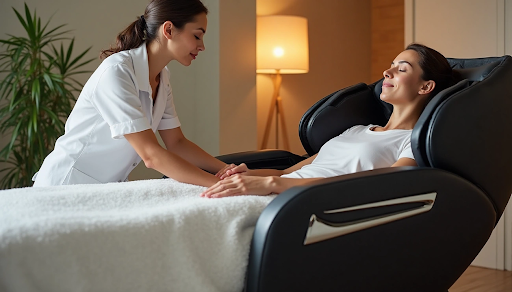
The cost difference between a massage chair and a massage therapist makes a strong case. A simple one-hour massage session costs around ₹4,500, which adds up to ₹2,34,000 yearly for weekly appointments. A quality massage chair priced at ₹3,00,000 brings this cost down to ₹825 per daily treatment. The price drops even further to ₹150 per massage over five years.
The comparison extends beyond just the money aspect. The American Chiropractic Association considers massage chairs reliable additions to therapy. Professional massage therapists still remain unmatched when treating chronic pain and injuries. Studies prove that trained professionals’ manual therapy reduces back pain and stress hormones effectively. Massage chairs come with their own set of advantages. They’re ready whenever you want them, deliver consistent results, and target multiple body areas with precise movements at once. This piece will help you understand if chair massages benefit your health, what role these chairs play in modern wellness routines, and whether technological convenience can match a human touch.
Therapeutic Needs: When a Human Touch Matters Most
The healing connection through human touch in massage therapy creates something mechanical devices can’t match. Research shows that combining therapeutic massage with human touch works better to reduce pain, nausea, anxiety, and fatigue in patients. This explains why traditional massage plays a vital role in meeting specific therapeutic needs.
Why massage therapists are better for injury recovery
Massage therapists have clear advantages over machines in treating injuries. These trained professionals can feel subtle tissue changes, adjust pressure based on feedback, and modify their techniques as needed. Studies reveal that deep-tissue massage lowers systolic, diastolic, and mean arterial pressure. Human therapy’s broader massage coverage proves highly effective in treating chronic nonspecific lower back pain.
Skilled practitioners help speed up injury recovery through therapeutic massage that boosts circulation, relieves muscle tension, and improves overall mobility. Massage therapists can also target specific problem areas that Sparnod Fitness massage chairs might overlook, especially with muscle strains, sprains, or post-surgical rehabilitation.
The role of diagnosis and medical history
Assessment is fundamental to make massage therapy work. Licensed practitioners start each session by evaluating your condition. They ask about pain location, quality, radiation, duration, and severity. This helps therapists build a clinical picture and customize treatment to your needs.
Massage therapists know when to refer clients to physicians. A case study showed how a therapist’s careful assessment uncovered an L5-S1 herniation that doctors had missed. Getting the right diagnosis helps create an effective treatment plan.
Limitations of massage chairs in therapeutic care
Massage chairs still face major therapeutic limitations despite advances in technology. Clinical research shows that while these chairs help with pain control and quality of life, they don’t match the results of physiotherapy. These mechanical devices also lack the emotional support and human connection that help people heal.
Some medical conditions make massage chairs unsafe. People with heart problems, open wounds, or specific injuries should stay away from these devices. Pregnant women need special care since massage chairs aren’t designed for prenatal treatment.
Trained professionals should handle therapeutic massage, particularly for injury recovery. Massage chairs work better for prevention and relaxation instead.
Everyday Relief and Prevention: Where Massage Chairs Shine
Professional therapists excel at injury rehabilitation, but massage chairs are nowhere near as effective at daily maintenance and prevention. This significant difference helps explain which option might serve you better during your wellness trip.
How chair massage helps with posture and daily stress
Office workers and people with sedentary lifestyles often experience chronic discomfort from poor posture. Massage chairs target this biggest problem by moving the spine into its natural curve and decompressing vertebrae. Regular sessions provide five key posture benefits:
- Muscle relaxation – These chairs ease tension in your shoulders, neck, and lower back that pull the body into unnatural positions
- Core muscle activation – Strong core muscles support the spine to improve upright posture
- Prevention of hunching – Regular upper back targeting helps curb forward head posture
- Improved body awareness – Better proprioception helps you maintain proper posture between sessions
- Spinal alignment – Zero-gravity positions spread body weight evenly and reduce spinal pressure
Chair massage substantially lowers cortisol levels (the stress hormone). Studies show a 36% reduction in stress scores after regular use.
Using Sparnod Fitness India chairs to prevent issues
Sparnod’s massage chairs come with zero gravity technology that works against gravity’s effects. This technology positions users in a neutral, weightless position and takes pressure off the spine. Their progressive multi-layered airbags perform deep massage on muscles and acupoints. These work especially well for feet, ankles, calves, arms, and shoulders.
Sparnod chairs’ carbon fiber heating functions activate cells and promote healthy metabolism. This feature relaxes your back and calf muscles, making it perfect for preventive maintenance rather than acute treatment.
Are chair massages good for you long-term?
Research supports the long-term benefits of regular chair massage use. A largest longitudinal study showed decreased serum cortisol and DHEA-S levels after six months. This effectively managed chronic stress in adults.
Experts recommend 15-20 minute sessions, no more than three times daily. This timing prevents muscle soreness and maximizes therapeutic effects. Regular sessions work better for lasting benefits.
Massage chairs serve as valuable tools to maintain wellness between professional treatments. They complement your overall health strategy rather than replace professional care.
Cost, Convenience, and Consistency Compared
Practical factors like money, time, and results often shape our wellness choices. These factors substantially affect whether you should buy a massage chair or visit a therapist.
Massage chair cost vs massage therapy cost
The numbers make a strong case for massage chairs. A one-hour massage therapy session costs about ₹5,000. Weekly appointments add up to ₹260,000 per year. A mid-range massage chair costs around ₹340,000 and provides daily sessions at roughly ₹930 each for the first year. The value gets better with time. The cost drops to just ₹170 per massage over five years.
Studies back up these affordable options. Massage chair therapy costs only 60.17% compared to regular physiotherapy treatments. The savings grow even more for families. Two people using a premium chair worth ₹840,000 daily brings the cost down to about ₹385 per massage over three years.
Time commitment and scheduling flexibility
Massage chairs save precious time. Regular massages need appointments, travel time, and full session commitments. You won’t face cancellation fees or scheduling hassles with a chair.
Unlike therapy sessions, massage chairs let you read, watch TV, or take calls while getting treatment. This feature helps busy professionals get their therapy without losing productivity.
The best part? Massage chairs work around your schedule. You can take a quick 10-minute session or relax at midnight without booking ahead. No more struggling with a therapist’s limited hours or availability.
Consistency of results: machine vs human
The main difference between chairs and therapists lies in consistency. A therapist’s performance might change due to skill, tiredness, or personal factors. Massage chairs deliver similar results every time.
Research shows both methods help control pain and boost life quality. While physiotherapy might work better for certain treatments, massage chairs make up for it through reliability and easy access.
Massage chairs can work on multiple body areas at once, while therapists focus on one area at a time. This complete approach means shorter sessions without missing any spots.
Customization and Technology: How Far Have Chairs Come?
Massage chair technology has transformed what these devices can do for personal wellness. Premium massage chairs today can mimic real human massage therapy techniques like Shiatsu. The line between mechanical and manual treatments has become thin.
3D vs 4D massage chair: What’s the difference?
3D massage chairs mark a big step forward from older models. These chairs come with rollers that move in three directions: up/down, side-to-side, and forward/backward (the vital Z-axis). The rollers can push deeper into muscles and users can adjust the intensity up to 5 levels of pressure.
4D massage chairs enhance this experience by adding speed control. These chairs can change roller speed while working, which creates a more natural, human-like massage. Japanese developers created this technology after studying thousands of massage therapists’ techniques. They turned these insights into algorithms that vary speed throughout automatic programs.
The real difference shows up in how well they work:
- 3D chairs are great at steady pressure and deep tissue work
- 4D chairs feel more realistic with their speed changes
- Both chairs work much better than simple massage functions
Can massage chairs replace massage therapists?
Even the best chairs can’t match what trained professionals do. Massage chairs work well with vibration techniques, but therapists know many methods they can customize for each person. These chairs can’t ask about a client’s condition, figure out the right pressure, or change their approach based on how someone responds.
Purpose of massage chair in modern wellness routines
Modern massage chairs serve as wellness tools rather than therapy replacements. They come with features like SL-track systems, zero gravity recline, and AI-powered body scanning. These chairs complement traditional care by being easy to access and consistent.
The future looks bright with new developments. Few latest Massage Chair uses AI healthcare tech, designs inspired by nature, and helps with rehabilitation. These chairs might become health monitoring tools that track vital signs and give useful health data.
These chairs work best when used 15-20 minutes at a time, up to three times daily. They’re perfect to use between visits to massage professionals.

Conclusion
The Perfect Balance: Finding Your Optimal Massage Solution
A close look at massage chairs and massage therapists shows this isn’t about picking sides. The real question is about finding what works best for you.
Professional massage therapists are essential for injury recovery, chronic pain management, and detailed diagnosis. They know how to assess, adapt, and create a human connection that machines can’t match. All the same, Sparnod Fitness massage chairs give you great advantages for daily wellness, especially when you think about the costs.
Weekly visits to a therapist at ₹5,000 per session add up to ₹2,60,000 each year. A quality Sparnod massage chair costs ₹3,40,000, which breaks down to just ₹170 per massage over five years of daily use. The chair stays ready whenever you need it, with no appointments needed.
Results tell the whole story. Therapists excel at targeted treatment, but Sparnod chairs pack impressive features. Zero gravity positioning, progressive airbag systems, and carbon fiber heating help fix posture and reduce stress. The chair’s 3D and 4D technology mimics human techniques and works on multiple body areas at once.
The best solution might be to use both. Your massage chair takes care of daily stress relief, while you visit a therapist for specific issues that need a human touch. This approach helps you get the most benefits at the lowest cost.
Don’t see this as choosing between two options. Think about how both can work together in your wellness experience. Your needs, budget, and lifestyle will shape the right mix. Regular massage keeps you healthy in body and mind, whether it comes from skilled hands or smart technology.
FAQs
Q1. Are massage chairs as effective as human massage therapists?
Massage chairs are highly effective for daily stress relief and posture improvement, but they can’t fully replace human therapists, especially for injury recovery and chronic pain management. Therapists offer personalized treatment and can adapt techniques based on individual needs.
Q2. How often should I use a massage chair?
For optimal results, it’s recommended to use a massage chair for 15-20 minute sessions, up to three times daily. This frequency helps maintain wellness without causing muscle soreness.
Q3. What’s the cost difference between massage chairs and regular massage therapy?
A quality massage chair can be more cost-effective in the long run. While a chair may cost around ₹3,40,000 upfront, it averages to about ₹170 per massage over five years of daily use. In contrast, weekly massage therapy sessions can cost over ₹2,60,000 annually.
Q4. What are the main benefits of using a massage chair regularly?
Regular use of massage chairs can help improve posture, reduce daily stress, lower cortisol levels, and provide consistent muscle relaxation. They’re particularly beneficial for those with sedentary lifestyles or office workers.
Q5. Can massage chairs be used during pregnancy?
Massage chairs aren’t primarily designed for prenatal treatment and may require special precautions during pregnancy. It’s best to consult with a healthcare provider before using a massage chair while pregnant.