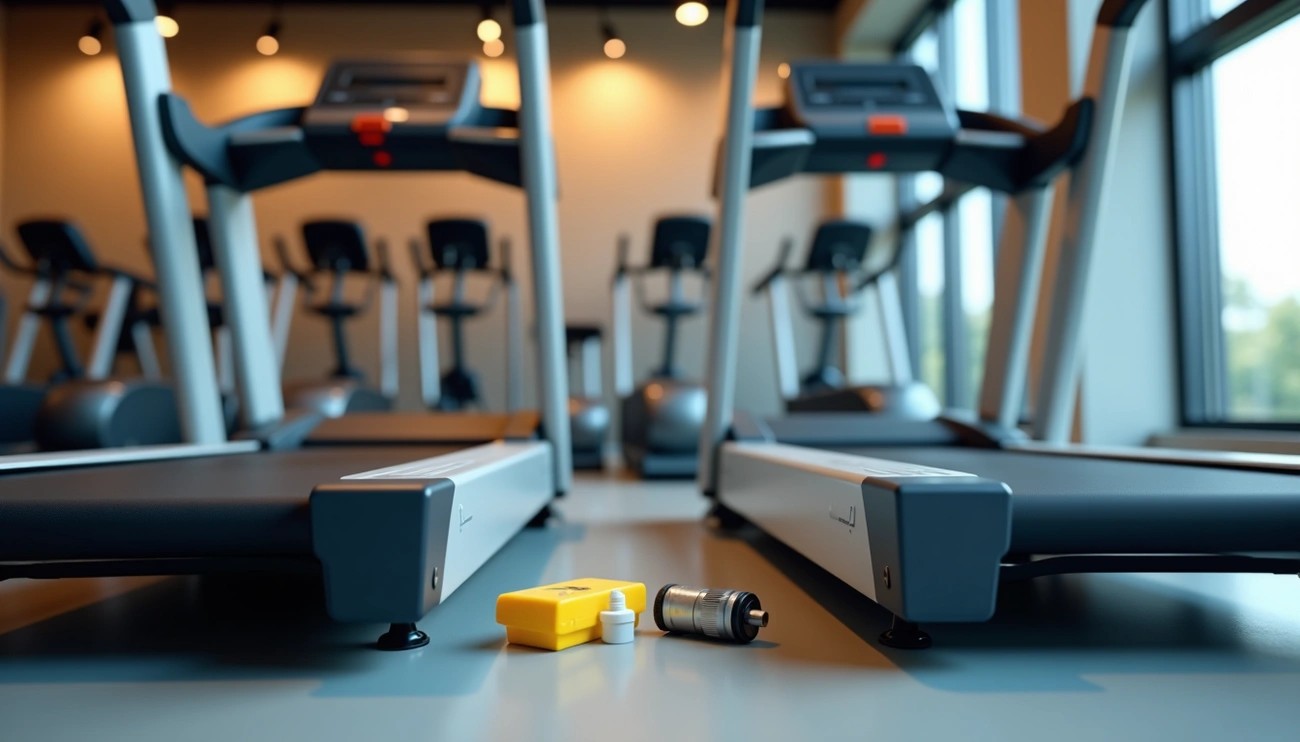
Treadmill motors serve as your fitness equipment’s core component and determine its performance and durability. Smart buyers who understand motor specifications make better purchasing decisions in the Indian market. Most treadmills come with a 2.5 HP motor, though you’ll find options ranging from 1.5 to 5.0 HP.
DC motor treadmills give home users in India the perfect mix of performance, cost, noise levels, and efficiency. These motors start at lower voltages, let you adjust speeds easily, and run more quietly than AC motors[-5]. AC motors pack more power and work better in commercial gyms where they run non-stop. CHP (Continuous Horsepower) stands out as the key specification that shows how much sustained power your motor delivers during workouts without overheating.
This detailed piece breaks down AC and DC motor differences, explains power metrics, looks at what makes motors last longer, and guides you to pick the right motor that matches your needs.
AC vs DC Treadmill Motors: Key Differences for Indian Buyers
The choice between AC and DC treadmill motors is a vital factor to make an informed purchase decision. These motor types work differently and serve different purposes in the fitness equipment world.
How AC motors work in commercial treadmills
AC (Alternating Current) motors employ the alternating current that buildings typically receive. These motors create a rotating magnetic field inside commercial treadmills that turns the motor and powers the belt. AC motors don’t need power conversion because they use power directly from wall outlets, unlike DC motors.
AC motors’ design makes them perfect for commercial settings. These motors run continuously without overheating or losing performance. Gyms can run their treadmills all day without breaks. AC motors are built specifically to handle heavy, non-stop use in fitness centers.
AC motors shine with their smooth performance. Users get consistent speed control, which helps maintain steady pacing during long workouts. On top of that, these motors respond quickly to speed and incline changes, which benefits heavier users especially.
DC motor functionality in home-use treadmills
DC (Direct Current) motors take a different approach. Treadmills with DC motors convert AC power from wall outlets to direct current that flows one way. Most DC motors use brushes and a commutator to deliver power that spins the motor.
DC motors’ design brings several advantages that work well at home. The motors accelerate faster from start because of quick torque rise. These motors also give you better speed control since speed and load torque have an inverse relationship.
DC motors are compact and lightweight compared to AC motors, which helps them blend into home treadmill designs. This feature works great in Indian homes where space comes at a premium.
DC motors excel at energy efficiency. They use less power while running because they have magnets instead of copper windings. Indian households can save on electricity costs with these motors.
Treadmill ac motor vs dc motor: Which suits Indian homes better?
DC motor treadmills give Indian homes the best value. The quiet operation works well in apartments where noise might bother neighbors. These motors start, stop, and change speeds faster than AC motors – perfect to get your interval training done.
Maintenance needs differ between these motors. Traditional DC motors come with carbon brushes that wear out and need replacement. Quality DC motors last 10-20 years with good care when used for regular home workouts.
DC motors cost less than AC motors, which makes sense for Indian households. Most Indian users who walk or jog a few times each week don’t need to spend extra on high-end AC motors.
Power requirements matter in Indian homes. AC motors handle non-stop use, but DC motors in home treadmills need a 20-minute break after 50 minutes of use. This pattern matches typical home workout times perfectly.
A quality DC motor treadmill ended up being the best choice for most Indian homes. It gives you the right mix of performance, cost, noise, and efficiency unless you’re running a small gym or have several serious runners at home.
Performance Metrics: Power, Speed, and Responsiveness
Power metrics show what a treadmill motor can handle. This knowledge is vital to buy the right machine. These specifications will give a reliable performance from your treadmill for years ahead.
Peak vs. continuous duty HP explained
Horsepower (HP) measures motor power, but not all HP ratings mean the same thing. You’ll see several different measurements while comparing treadmills:
Peak Duty HP shows the maximum power a motor generates for a brief moment—like in a sprinter hitting top speed for seconds. Advertisements often display this number, but it doesn’t show everyday performance. A motor can’t maintain peak power without wearing out faster, just as runners can’t keep their sprint speed throughout a marathon.
Treadmill Duty HP sits between peak and continuous ratings. The motor changes between high and lower power outputs to stay cool—much like runners who slow down to breathe before picking up speed again.
Continuous Duty HP (CHP) shows how much power the motor delivers continuously during workouts without overheating. This rating matters most because it shows real-life performance. Treadmills with CHP labels typically last longer and perform better than those with just HP ratings.
CHP requirements for walking, jogging, and running
Your workout intensity determines the CHP you need:
| Activity | Occasional Use (1-3 times weekly) | Regular Use (4+ times weekly) |
| Walking | 1.5-2.0 CHP | 2.0-2.5 CHP |
| Jogging | 2.0-2.5 CHP | 2.5-3.0 CHP |
| Running | 2.5-3.0 CHP | 3.0+ CHP |
Users weighing over 90-100 kg or those who use high inclines often should add 0.5 CHP to these numbers. Marathon trainers or intense interval workout enthusiasts should think over at least a 3.5 CHP machine.
Speed consistency and torque in Indian power conditions
Speed consistency creates a smooth workout feel. Good treadmills keep steady belt speed even during foot strikes, which creates a safe and comfortable experience.
Torque—knowing how to move the belt—affects performance substantially. Poor torque leads to workout disruptions. RPM (revolutions per minute) and torque have an inverse relationship: motors with lower RPM give higher torque. Motors with RPM ratings of 4,000 or below deliver better durability. Stay away from motors that have RPM ratings above 5,000, whatever their advertised horsepower.
AC motors provide smooth, consistent operation that makes them perfect for gyms. Quality DC motors with enough CHP still give excellent stability for home workouts. A hesitating belt might mean an underpowered motor.
Responsiveness during interval training
Responsiveness shows how fast your treadmill adapts to speed changes—a vital feature for interval training where you switch between high and low intensities.
AC motors change speeds gradually with smoother ramp-ups, which works well for continuous gym use. DC motors adapt faster to speed adjustments, making them great for home interval workouts. Quick starts, stops, and speed changes give these motors an edge for varied training programs.
Treadmills should switch between speeds smoothly without delays or jerky movements for effective interval training. Both motor type and the machine’s overall build quality determine this responsiveness.
Durability, Noise, and Energy Efficiency
Your treadmill motor’s lifespan, noise level, and power consumption will affect how happy you are with your equipment in the long run. These factors need your attention since they shape your workout experience and what you’ll spend on maintenance.
How long do treadmill motors last with regular use?
A well-maintained treadmill motor that’s used properly can run for 7-12 years, with most lasting about 10 years. Quality motors rated at 2.5 continuous horsepower (CHP) or higher handle daily workouts better without getting too hot.
AC motors are tough and work great for heavy use. These motors often come without brushes, which means fewer parts can wear out. They need less maintenance and last longer as a result.
DC motors can serve you well for home use even though they have carbon brushes that wear down over time. A 3.0 HP DC motor that’s well-maintained and mostly used for walking might work for 10-20 years. Research shows that poor maintenance causes 80% of treadmill breakdowns, not motor problems.
Motor cooling systems comparison: Fan vs. brushless
Cooling systems play a big role in how long your motor lasts and how well it works. Fan-cooled motors use special fans to remove heat, while brushless designs naturally run cooler.
Regular DC motors with brushes create more heat from friction, so they need good cooling systems to stay at the right temperature. Brushless DC motors run cooler by design, which helps them last longer.
AC motors stay cooler during long workouts, making them great for extended sessions. Good cooling systems also keep dust away, which helps the motor run quietly and efficiently.
Noise levels in Indian apartments: AC vs DC
Noise matters a lot if you live in an Indian apartment. DC motors run more quietly than AC motors, which makes them better for homes. Most home treadmills use DC motors because they’re quieter.
Here’s how loud different treadmills can be:
- Walking/jogging on DC motors: about 70-75 decibels (like a dishwasher)
- Running on standard treadmills: around 80 decibels (like a garbage disposal)
- Treadmills that need maintenance: up to 90 decibels (as loud as a lawnmower)
Brushless motors (both AC and BLDC) make less noise because they don’t have brush friction. Placing your treadmill near room corners instead of the middle of the floor can reduce noise.
Energy efficiency of DC motor treadmill models
DC motors save more energy than AC motors. They use power based on what you need rather than drawing the same amount all the time, which could lower your electricity bills. This becomes really important with India’s changing electricity rates.
Brushless DC motors are the most efficient option. They combine AC motors’ durability with DC technology’s energy savings. Most Indian homes find DC motors economical for regular workouts because they balance performance and power consumption well.
Maintenance and Troubleshooting Essentials
Regular maintenance will extend your treadmill motor’s lifespan and save you from pricey repairs. A proactive approach to treadmill care will give you optimal performance that lasts years.
Brush replacement in DC motors: When and how
DC motors need their carbon brushes checked every six months in commercial settings and yearly at home. You should replace these brushes when they wear down to about 3/8 inch or 1/3 of their original size. The replacement process starts with disconnecting the power completely. Next, find the brush caps – usually two plastic caps on standard motors. Remove them carefully and take out the old brushes. Put in new ones with the right orientation. Make sure they move freely and have the right spring tension.
Monthly cleaning and lubrication checklist
Your motor will last longer with proper monthly maintenance:
- Unplug the treadmill completely and wait 60 seconds
- Remove motor cover and vacuum dust from motor compartment
- Check all assembly bolts for proper tightness
- Check belt tension and alignment (belt should lift 2-3 inches when pulled)
- Apply silicone-based lubricant every 3 months or after 150 miles
- Check power cords for signs of damage
Motors can overheat and fail if you skip regular lubrication. This happens because increased friction makes motors draw too much power.
Common motor issues and error codes
Quick problem diagnosis starts with understanding these error codes:
E1: Shows communication failure between console and control board. Check data cable connections.
E2: Points to motor or control board issues. Test the motor first. If it works fine, look at the control board.
E3: Indicates speed sensor problems. Check sensor alignment and wiring.
AC/DC-4: Means the motor draws too much power, usually from high friction between belt and deck. Good lubrication often fixes this.
Using surge protectors to protect motor boards
Manufacturers don’t agree about surge protectors. Some say you should use them to protect electrical components. Others strongly warn against them. The best approach is to follow your treadmill manufacturer’s specific guidelines. Unplugging your treadmill after each use remains the safest way to protect against power fluctuations.
Best Use Cases and Sparnod Fitness India Recommendations
Your perfect treadmill choice depends on how you plan to use it and what motor specs you need. Sparnod Fitness brings several options to the Indian market that match different workout needs.
Best Sparnod DC treadmill for home use: STH-1200
The STH-1200 stands out as a great pick for typical Indian homes with its 2.5 CHP/4PHP DC motor. This motor packs power yet runs quietly at speeds from 1-12 km/hr, which works great for walking and jogging. The smart design includes a foldable frame and wheels so you can easily move it around your home.
This model supports users up to 110 kg, making it a solid choice for most people. Beginners will love the 12 preset workout programs that take the confusion out of starting a fitness routine. On top of that, the anti-slip running belt keeps you safe during intense workouts.
Top Sparnod AC treadmill for heavy users: STH-6000
The STH-6000 shines with its strong 3HP continuous (6HP peak) motor, perfect for serious runners or homes with multiple users. The AC motor handles long workouts without losing steam – exactly what you need for intense training.
Users weighing up to 140 kg can work out on its roomy 53″ x 20.5″ running surface. Fitness enthusiasts will appreciate speeds from 1-18 km/hr and 15 auto-incline levels that create challenging uphill workouts. The 15.6″ LCD touch screen with Wi-Fi makes every session more engaging.
Choosing for light commercial use: Sparnod STH-5000
The STH-5000 hits the sweet spot between home and commercial needs with a 2.5 HP motor reaching 18 km/h. The generous 1260*450 mm running area fits different running styles.
Small businesses, apartment gyms, and offices will find this model ideal as it handles multiple users reliably without the price tag of commercial machines. Users at different fitness levels can customize their workouts with the 1-18% auto incline feature.
When to upgrade from DC to AC motor treadmill
An AC motor treadmill makes sense if your household has several serious runners or daily training sessions last beyond 50 minutes. The same applies if you weigh over 100 kg or love high incline workouts – an AC motor gives you that extra stability.
AC motors prove their worth in light commercial settings like small clinics, hotels, or shared spaces where durability matters most. Dedicated home users might want to look at high-CHP DC treadmills before jumping to pricier AC models.

Conclusion
A good understanding of treadmill motors will help you make smarter fitness equipment purchases in India. The motor specs directly affect how well your treadmill performs, how long it lasts, and how happy you’ll be with it. DC motors are clearly the best choice for most Indian homes. They run more quietly, adjust speeds faster, and use less power – making them perfect for apartments and regular home workouts.
The continuous horsepower (CHP) rating matters more than peak HP when you’re picking a motor. A 1.5-2.0 CHP motor is enough if you plan to walk occasionally. Serious runners need at least 3.0 CHP, especially if they train often. Good maintenance will make your motor last longer. Simple things like cleaning and lubrication can prevent 80% of common treadmill problems.
Sparnod Fitness has great options that fit different needs in the Indian market. Their STH-1200 comes with a 2.5 CHP DC motor that’s perfect for typical households and supports users up to 110 kg. The powerful STH-6000 with its reliable AC motor might be better for serious fitness buffs since it handles users up to 140 kg. The STH-5000 sits nicely between home and light commercial use.
Your choice between AC and DC motors comes down to what you need. AC motors work better in commercial settings where they run continuously. Most Indian homes will find DC motors give them the best mix of performance, cost, noise level, and power savings. Now you know enough to pick a treadmill that will support your fitness goals reliably for years.
FAQs
Q1. What’s the difference between AC and DC treadmill motors?
DC motors are typically quieter, more energy-efficient, and better suited for home use. AC motors are more powerful and durable, making them ideal for commercial gyms or heavy usage.
Q2. How much horsepower do I need in a treadmill motor?
For walking, a 1.5-2.0 CHP motor is sufficient. Joggers should look for 2.0-2.5 CHP, while runners need at least 2.5-3.0 CHP. Add 0.5 CHP if you weigh over 90-100 kg or frequently use high inclines.
Q3. How long do treadmill motors typically last?
With proper maintenance and regular use, treadmill motors can last between 7-12 years, with an average lifespan of about 10 years. Quality motors with higher CHP ratings tend to last longer.
Q4. What maintenance does a treadmill motor require?
Regular maintenance includes monthly cleaning, checking belt tension and alignment, and applying silicone-based lubricant every 3 months or 150 miles. For DC motors, inspect and replace carbon brushes when necessary.
Q5. Are AC or DC motors better for Indian homes?
DC motors are generally better suited for Indian homes due to their quieter operation, energy efficiency, and lower cost. They’re ideal for typical home workout durations and apartment living, while still providing sufficient power for most users.