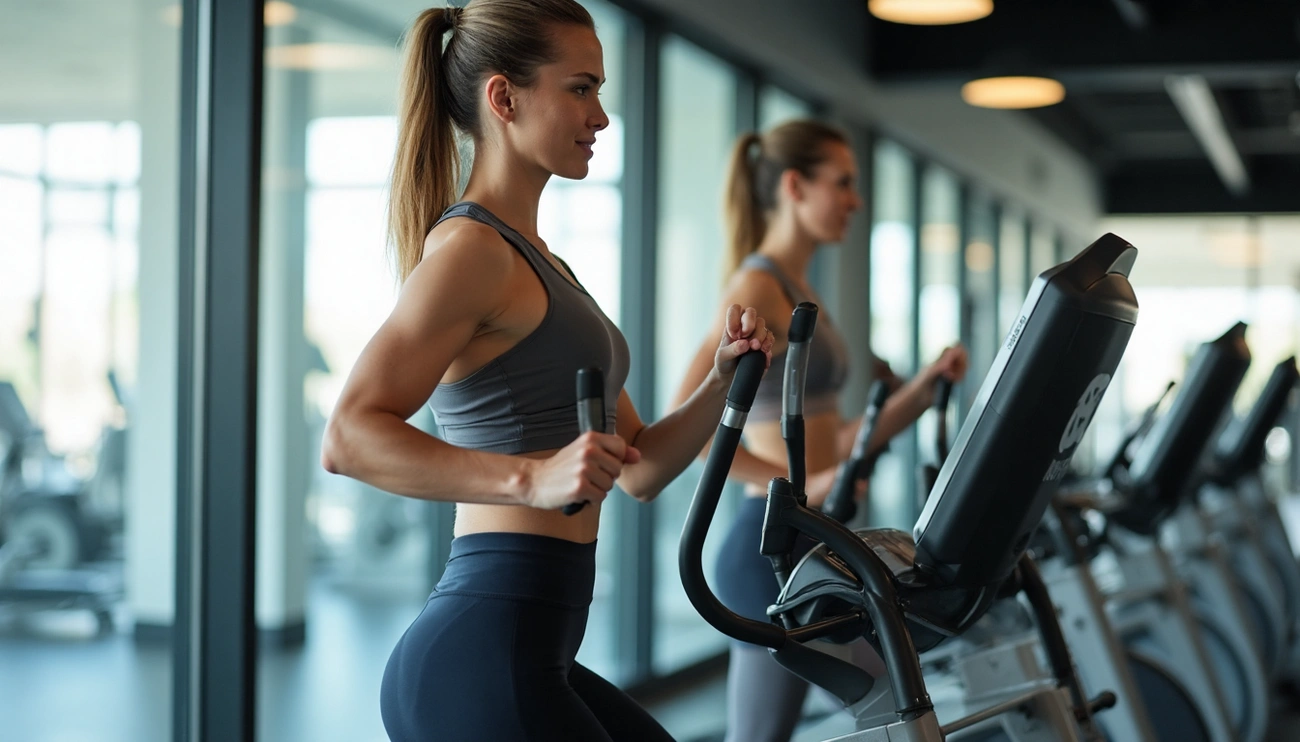
Elliptical workouts are the quickest way to reshape your body composition, even if you exercise just 15 minutes regularly. My experience as a fitness trainer shows how clients get amazing results once they become skilled at using this versatile machine.
A 30-minute elliptical session burns 270-378 calories based on your body weight. This makes it a great choice to lose weight. The machine gives beginners an easy start into cardio workouts. You can build your stamina step by step without pushing too hard. The best part? Your upper and lower body work together, which helps burn more calories during and after the workout. But you need the right form to stay safe and get the best results. This piece shows you how to nail your elliptical technique, create workout plans that work, and see quick results.
Why Elliptical Workouts Deliver Fast Results
Elliptical training works so well because it combines several benefits that speed up your fitness progress. This versatile machine stands out from other cardio equipment. You’ll get multiple advantages that make every minute of your workout count.
Low-impact cardio with high calorie burn
Elliptical workouts are great because you can exercise intensely without hurting your joints. Running forces your body to absorb two to three times your body weight with each step. The elliptical eliminates this stress but still burns substantial calories—270-378 calories in just 30 minutes based on your weight.
This gentle yet powerful approach works for everyone, especially people who have joint pain or injuries. The elliptical burns about 10% more energy than treadmill workouts at the same effort level. Combined with good nutrition, it becomes a quick way to manage your weight.
Full-body engagement with upper and lower muscles
The elliptical works about 80% of your muscles, unlike cycling or walking that focus on your lower body. Your quads and hip flexors activate as you pedal forward. The movement backward engages your glutes and hamstrings.
Your arms move and work these muscles:
- Biceps, triceps, and shoulders
- Chest muscles and upper back
- Core muscles for stability and posture
This detailed muscle engagement explains why elliptical workouts feel tougher than exercises that work in one direction. You can increase glute and hamstring activation by 635% compared to flat walking by raising the incline. This gives you strength and cardio benefits in a single workout.
Improves endurance and heart health
Your cardiovascular system gets substantially better with regular elliptical training. Multiple muscle groups need oxygen at once, so your heart and lungs become more efficient. Better aerobic fitness increases your VO2max—how well your body uses oxygen. This directly reduces your risk of cardiovascular disease, metabolic issues, and certain cancers.
Most people see clear improvements in their stamina after just two weeks of consistent training. Your muscles become more efficient and use less oxygen during exercise. They also produce less carbon dioxide, which means you won’t get tired as quickly during workouts and daily activities.
These combined benefits of low-impact intensity, full-body muscle work, and heart health improvements make elliptical workouts show results quickly.
Mastering Proper Elliptical Form
The right form on the elliptical will prevent injury and help you get the most from your workouts. Many people limit their progress because they start using the machine without learning proper technique. I’ve seen this mistake often as a trainer.
Foot placement and pedal technique
Your foot position creates the foundations for a good elliptical workout. You should place your feet near the inside edge of the pedals instead of the outside to keep proper alignment. Your weight should spread evenly between both feet. Put pressure through your heels rather than your toes to avoid numbness and tingling. A natural movement comes from rolling through your entire foot with each stride. Start with the heel, move through the midfoot, and end with a gentle push from your toes.
Using handlebars for upper body activation
The handlebars do more than help with balance—they turn your session into a full-body workout. Hold them with a light grip and keep your elbows slightly bent. Your upper body benefits will increase when you push and pull the handles with the same force as your legs. You can challenge yourself by using just one arm at a time to work your core stabilizers. Short intervals without holding the handles will make your abs work harder to keep balance.
Maintaining posture and core engagement
Keep your shoulder blades pulled back gently and tuck your chin slightly. Your shoulders should stay relaxed instead of rising toward your ears. Pull your hips forward slightly to activate your glutes and abs while keeping a neutral spine. This position protects your back and helps recruit muscles better.
Common mistakes to avoid
These form errors can hurt your elliptical training:
- Slouching or leaning heavily on the handlebars reduces lower body work
- Bouncing up and down instead of moving smoothly and with control
- Letting momentum take over rather than keeping muscles engaged
- Pushing through your toes instead of spreading weight evenly
- Gripping handlebars too tight creates unnecessary tension
Best Elliptical Workouts for Fast Results
Let’s delve into specific elliptical workouts that deliver maximum results in minimal time, now that you understand proper form.
15-minute elliptical workout for beginners
This quick routine helps new users build endurance without overwhelming their body:
- 5 minutes: Warm up at resistance level 3 with forward pedaling
- 5 minutes: Increase to resistance level 7 (challenging but manageable)
- 5 minutes: Decrease to resistance level 5 for a controlled cooldown
Beginners should do this workout 3-4 times weekly and gradually increase duration as their fitness improves.
30-minute elliptical workout for fat burn
This balanced workout helps optimize fat loss through moderate-intensity training:
- 5-minute warmup at low intensity (RPE 3-4)
- 20-minute main session at moderate-to-high intensity (RPE 5-7)
- 5-minute cooldown at decreasing intensity
Your body burns approximately 270-378 calories in a 30-minute session, depending on your weight. This makes it perfect for long-term weight management.
Elliptical HIIT workout for quick calorie burn
HIIT maximizes calorie burn in less time and creates an afterburn effect that lasts up to 48 hours after your workout:
- 3-minute warmup at moderate pace
- 20 minutes of intervals: 30 seconds maximum effort followed by 30 seconds recovery
- 2-minute cooldown
Tabata-style elliptical training
Tabata training involves 4-minute rounds with 20 seconds of all-out effort followed by 10 seconds of rest, repeated 8 times. This intense method boosts your metabolic rate and cardiovascular endurance significantly. Complete 3-4 rounds with 2-minute rest periods between each for best results.
Reverse pedaling for muscle targeting
Backward pedaling targets different muscle groups:
- Activates hamstrings, gluteal muscles, and calves more intensely
- Burns more calories than forward pedaling because it recruits more muscles
- Reduces knee stress, making it excellent for rehabilitation
Mix 5 minutes forward with 2 minutes backward pedaling for a detailed lower-body workout.
Using Sparnod Fitness SE-120 for interval training
Sparnod Fitness SE-120’s design works perfectly for progressive interval training:
- Start with 3-5 minutes warmup at resistance level 1-2
- Perform 1-minute intervals at increasing resistance levels (2-4-6-8-10)
- Reverse the pattern (10-8-6-4-2) for a balanced workout
- Cool down properly to prevent muscle soreness
Tips to Maximize Your Elliptical Training
Science-backed strategies can boost your elliptical workout results beyond just showing up. Your training effectiveness needs strategic planning and tracking.
Track progress with heart rate and RPE
Heart rate monitoring during elliptical sessions gives you significant feedback about workout intensity. Men can calculate their maximum heart rate by subtracting their age from 220. Women should use 206 minus 88% of their age. The sweet spot for fat burning lies between 50-85% of your maximum heart rate.
The Rate of Perceived Exertion (RPE) scale is a great way to measure intensity without technology. Your target should be 5-7 during steady-state cardio and 8-9 during intervals on a scale of 1-10. RPE relates well with actual heart rate – multiply your RPE by 10 and it often matches your heart rate.
Incorporate strength training off the machine
Cross-circuit training can dramatically boost your elliptical results. A powerful approach combines 60 seconds of strength exercises like push-ups, squats, or lunges with 60 seconds on the elliptical as active recovery. This method burns more calories and builds muscle that lifts your metabolism even after finishing your workout.
Fuel your body with the right pre/post workout nutrition
Complex carbohydrates with lean protein 1-3 hours before exercise give you sustained energy. Whole grain toast with avocado or oatmeal with banana work well.
Recovery happens best with a 2:1 to 4:1 carbohydrate-to-protein ratio within 30-60 minutes after your workout. Greek yogurt with berries or a balanced protein shake helps replenish glycogen stores and repair muscles.
Stay consistent with a weekly plan
Daily 30-minute sessions work better than occasional longer workouts. Multiple 10-minute sessions throughout your day can be effective when time is tight. Workout variety prevents plateaus and keeps motivation high.
Use Sparnod Fitness XE-100 for home training variety
Sparnod Fitness XE-100’s versatility makes it perfect for home training. Progressive overload becomes easier with adjustable resistance levels. The built-in display helps track your speed, distance, and calories burned. Your fitness will improve as you gradually increase resistance and session duration.
Conclusion
Elliptical training is one of the best ways to change your body while protecting your joints. This versatile machine delivers great results by combining low-impact movement with full-body participation. On top of that, it burns up to 378 calories in just 30 minutes, making it perfect for weight management goals.
Good form makes all the difference between average and exceptional results. Your foot placement, handlebar technique, and posture will help activate muscles better and prevent strain. Taking time to learn these basics before increasing intensity will improve your fitness trip results.
These workout routines work for everyone, whatever their fitness level. New users can start with the 15-minute program. Those who want more challenge can try HIIT or Tabata protocols. Reverse pedaling adds variety and works different muscle groups to create a complete training approach.
Sparnod Fitness machines like the SE-120 and XE-100 are great platforms to do these workouts at home. Their adjustable resistance levels and built-in tracking features help you progress step by step while monitoring improvements.
Note that consistency brings results. A realistic schedule of regular sessions will change your fitness better than occasional long workouts. Supporting your training with good nutrition and complementary strength exercises substantially improves your progress.
The elliptical might look simple at first, but its ability to deliver quick, green results is amazing. You now understand the science and strategy behind effective elliptical training and have everything you need to reach your fitness goals. Start today, use these principles regularly, and watch your body change through this powerful yet gentle exercise.
FAQs
Q1. How can I improve my elliptical workout technique?
Maintain proper posture by standing tall with relaxed shoulders, engage your core, and distribute your weight evenly on your feet. Use the handlebars to activate your upper body, and focus on smooth, controlled movements rather than bouncing.
Q2. What’s the ideal duration for an effective elliptical workout?
For weight loss and overall fitness, aim for 30 minutes to 1 hour of elliptical training daily. However, even shorter sessions of 15-20 minutes can be beneficial if performed consistently and with proper intensity.
Q3. How can I maximize calorie burn on the elliptical?
Incorporate high-intensity interval training (HIIT) or Tabata-style workouts into your routine. Alternate between periods of high effort and recovery, and gradually increase resistance levels to challenge your body and boost calorie burn.
Q4. Is it beneficial to pedal backward on the elliptical?
Yes, reverse pedaling can be beneficial. It engages different muscle groups, particularly targeting the hamstrings, glutes, and calves more intensely. It also burns more calories than forward pedaling due to increased muscle recruitment.
Q5. How should I fuel my body for elliptical workouts?
Consume complex carbohydrates with lean protein 1-3 hours before your workout for sustained energy. After your session, aim for a 2:1 to 4:1 carbohydrate-to-protein ratio within 30-60 minutes to support recovery and muscle repair.