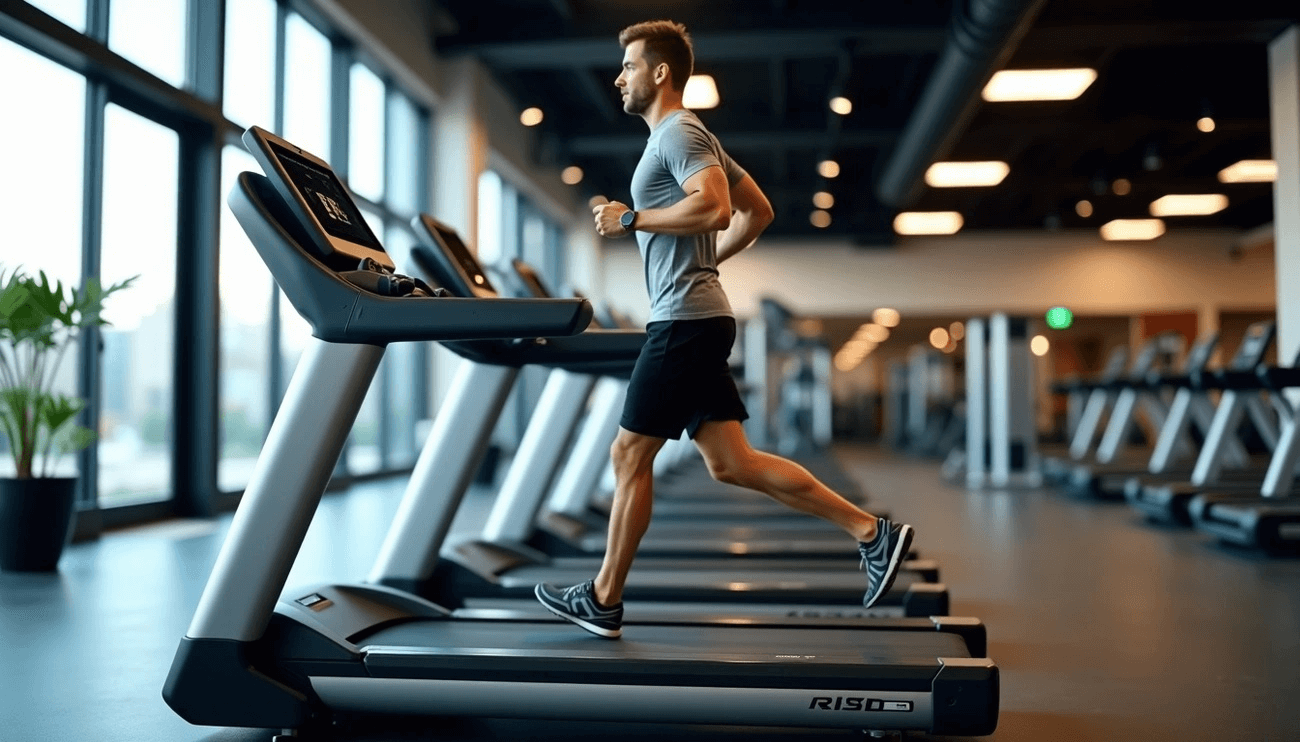
Quality commercial treadmills with the right features make a vital investment for any fitness facility. A study by the Consumer Product Safety Commission reveals that treadmill accidents lead to more than 24,000 emergency visits in the US alone. These numbers show why picking high-quality equipment goes beyond performance, your members’ safety depends on it.
Smart commercial treadmill selection can help you avoid decisions that get pricey down the road. A good commercial treadmill should support at least 300 kg, while proper dimensions ensure your users’ comfort. On top of that, advanced cushioning systems cut down joint impact by 40%, which keeps your members safe during workouts.
This piece gives you the key features to look for as you buy commercial treadmills in 2025. Your decision should balance durability, user experience, and value, from powerful motors rated between 3.0 and 5.0 CHP to smart technology integrations. Since treadmills remain the most used fitness equipment in gyms, your choice needs careful thought.
Motor Power and Durability: The Heart of a Commercial Treadmill
The motor is the heart of any commercial treadmill. It determines performance, reliability, and how long the equipment will last. You need to know motor specifications before buying equipment for heavy usage.
Why motor power matters in commercial settings
Commercial treadmills see constant use by multiple people throughout the day. A powerful motor will deliver smooth operation without speed or performance issues. High-quality motors also cut down maintenance costs and reduce downtime. This makes a significant difference for busy fitness facilities.
Commercial treadmills use AC (Alternating Current) motors rather than the DC (Direct Current) motors found in standard home models. AC motors excel at non-stop, continuous operation and have better temperature management systems. This difference helps explain what makes a treadmill commercial grade.
The motor’s quality affects:
- Consistent performance under heavy loads
- Speed maintenance without lagging
- Equipment lifespan
- Noise and vibration levels
Recommended CHP range for 2025 models
Continuous Horsepower (CHP) shows how well a treadmill motor performs over time, not just at peak output. Experts suggest these ranges for 2025 commercial models:
- 4.0 CHP and above: Perfect for full commercial grade treadmills
- 3.0-4.0 CHP: Good for light commercial use
- 5.0+ CHP: Best for premium commercial spaces with multiple heavy users
Users weighing over 90 kg need treadmills with an extra 0.5 HP in motor power.
Sparnod Fitness India models with high-performance motors
Sparnod Fitness makes several commercial-grade treadmills with powerful motors built for Indian commercial settings:
The STC-5800 comes with a resilient 6 HP AC motor that delivers great performance for intense training programs. The STC-5775 and STC-5765 both feature 5.5 HP AC motors that support users up to 180 kg.
The STC-5550 commercial treadmill pairs a 5.5 HP AC motor with a maximum user capacity of 170 kg. This makes it ideal for busy gyms that need durable equipment.
Belt and Deck Design: Comfort Meets Longevity
The belt and deck serve as the user interface of any commercial treadmill. They directly affect comfort, safety, and how long the equipment lasts. A well-laid-out running surface makes the difference between an uncomfortable workout and one that keeps users returning.
Ideal commercial treadmill dimensions and belt size
Commercial settings need running surface dimensions that work for users of all heights and stride lengths. Industry standards suggest a minimum belt width of 20 inches and length of 60 inches. Smaller dimensions can restrict natural movement, especially when you have taller users or those with longer strides.
Belt size affects user comfort and safety:
- Narrow belts (under 20 inches) limit side-to-side movement
- Short belts (under 60 inches) make users shorten their natural stride
- Wider belts (22 inches) give maximum comfort to all users
Importance of belt durability and multi-layer construction
Commercial treadmill belts face heavy wear from constant use. So, multi-layer construction has become standard in quality commercial models. These advanced belts usually include:
- Surface layer (top): PVC or urethane to provide durability and traction
- Reinforcement layer (middle): Fiberglass, Kevlar or carbon weave to add strength
- Base layer (bottom): Polyester or urethane fabric that provides structural integrity
Premium multi-layer belts between 1.6mm to 2.8mm thick perform better and last longer than simple 1-ply options. This construction is a key element in what makes a treadmill commercial grade.
Shock absorption systems for joint protection
Quality shock absorption greatly reduces impact forces, which lowers stress on joints and injury risk. These systems can cut impact by up to 40% compared to running on asphalt.
Popular shock absorption technologies include:
- Spring shock absorption systems
- Silicone cushioning systems
- Air cushion systems that adjust based on user weight
- Dual-zone cushioning with varied firmness levels
Advanced models let users adjust cushioning to simulate different running surfaces from soft (like sand) to firm (like pavement).
Sparnod models with advanced cushioning
Sparnod Fitness creates commercial treadmills with sophisticated cushioning technologies. The STH-1200MF comes with a dedicated deck shock absorption system that protects joints during long workouts. Their commercial models use multi-layer belts that are 1.4mm thick and durable enough for high-traffic environments.
Sparnod’s commercial treadmill belts combine superior materials that balance grip, comfort, and longevity. Their deck design focuses on reducing impact to create a joint-friendly running experience even during intense training sessions.
Smart Features and User Experience Enhancements
Modern commercial treadmills combine advanced technology with fitness functionality. The digital interface has become a key factor in what makes a treadmill commercial grade in 2025.
Touchscreen consoles and app integrations
High-definition touchscreen consoles have evolved beyond simple displays into immersive fitness hubs. Premium commercial models now come with screens from 10-inch to impressive 32-inch displays. These interfaces show clear workout metrics and provide entertainment options. The integration with fitness apps like MapMyRun gives users free access to tracking features and community involvement.
Bluetooth, Wi-Fi, and virtual training compatibility
Today’s commercial treadmills have expanded beyond simple connection options. They now use:
- Bluetooth 4.0 to connect headphones and heart rate monitors
- Dual-band Wi-Fi for stronger, reliable connections
- NFC/RFID technology for quick user profile access
Virtual training has reshaped workout experiences, and iFIT offers more than 17,000 trainer-led classes through scenic global locations.
User-friendly interfaces for all fitness levels
Commercial treadmills now come with user-friendly interfaces that are available to users of all fitness levels. Touch technology works like your smartphone, which makes navigation easy even for beginners. Some models include wireless charging pads that eliminate the need for cables.
Sparnod treadmills with immersive tech features
Sparnod’s commercial treadmills include advanced digital features designed for the Indian market. Their models offer Bluetooth connectivity for uninterrupted device pairing and fitness app integration. Sparnod treadmills stand out with customizable workout programs that adjust based on user’s goals and performance metrics, creating individual-specific exercise experiences.
Safety, Maintenance, and Warranty Considerations
Safety features need the highest priority since they directly affect user safety in commercial fitness facilities.
Emergency stop, handrails, and anti-slip surfaces
The safety system starts with emergency stop buttons and safety tethers mounted on both sides of the treadmill. Users can quickly stop the machine with these vital safety mechanisms if they slip or struggle to keep pace. Side handrails placed at the right height give essential support to beginners and seniors. The nonslip belt surfaces reduce fall risks during high-intensity workouts.
Self-lubricating belts and built-in diagnostics
Self-lubricating belts are a breakthrough that eliminates manual lubrication every 20-30 hours. The system uses a reservoir and distribution network to release lubricant automatically. Built-in diagnostics help facility managers spot potential problems before they become serious.
Warranty coverage for motor, frame, and parts
Most quality commercial treadmills come with frame warranties lasting 5-10 years. Motor warranty periods typically range from 5-7 years on commercial models. Sparnod Fitness provides complete coverage with clear terms for frame, motor, and parts.
Sparnod’s after-sales support and service network
Sparnod makes customer satisfaction a priority and responds to service requests within 6 hours. Their warranty includes all parts and materials but excludes cosmetic elements and accessories.

Conclusion
Commercial treadmills for your fitness facility in 2025 need several key features. Powerful motors rated at 4.0 CHP or higher give you the reliability needed to run continuously. The belt dimensions with multi-layer construction boost both comfort and longevity when used heavily.
Smart features have revolutionized how people use treadmills. Touchscreen consoles, app integrations, and connectivity options help users work out more effectively while having fun. Your members’ safety stays the top priority to protect them and lower liability risks.
Sparnod Fitness treadmills lead the Indian market by including all these significant elements. Their commercial models use reliable AC motors from 5.5 HP to 6 HP and support weights up to 180 kg. The advanced cushioning systems protect users’ joints during intense workouts, while smart technologies create customized workout experiences.
You need to balance durability, user experience, and value when investing in treadmills. Quality commercial equipment costs more upfront but lasts much longer under heavy use. The features we discussed will help you make choices that benefit your business and members over time.
Commercial treadmills are the foundation of most gym facilities. The right machines keep members returning while reducing maintenance issues and downtime. Focus on these must-have features for 2025 to build a fitness environment that runs strong for years.
FAQs
Q1. What are the essential features to look for in commercial treadmills for 2025?
Key features include powerful motors (4.0 CHP or higher), large running surfaces (at least 20″ x 60″), multi-layer belt construction, advanced cushioning systems, HD touchscreen consoles, and smart connectivity options like Bluetooth and Wi-Fi.
Q2. How important is motor power in commercial treadmills?
Motor power is crucial for commercial treadmills. A powerful motor (4.0 CHP and above) ensures consistent performance, smooth operation, and longevity under heavy usage conditions typical in commercial settings.
Q3. What safety features should commercial treadmills have?
Essential safety features include prominent emergency stop buttons, safety tethers, properly positioned side handrails, and non-slip belt surfaces. Some models also offer self-lubricating belts and built-in diagnostics to prevent potential issues.
Q4. How do smart features enhance the treadmill experience?
Smart features like HD touchscreen consoles, app integrations, and virtual training compatibility offer personalized workout experiences, performance tracking, and entertainment options, making workouts more engaging and effective.
Q5. What should I consider regarding warranties for commercial treadmills?
Look for comprehensive warranty coverage, typically including 5-10 years for the frame, 5-7 years for the motor, and separate coverage for parts. Also, consider the manufacturer’s after-sales support and service network for prompt issue resolution.